Baglamukhi Temple Nalkheda: Siddh Peeth, Havan and Darshan Guide
By Mahakal MP – Dharmik Tours & Travels Team · Ujjain ·
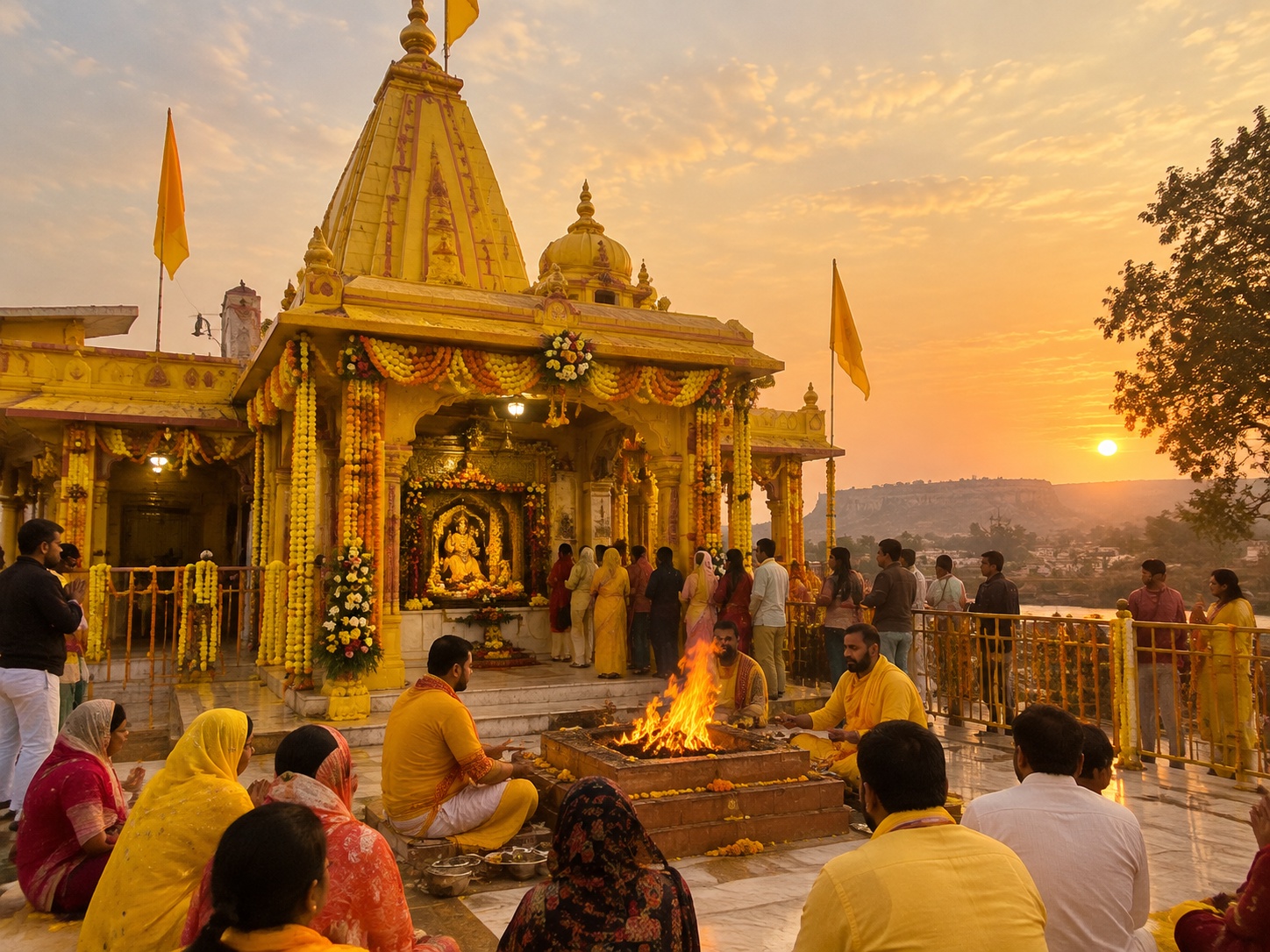
The Maa Baglamukhi temple at Nalkheda is one of the most revered shrines of the Goddess in Madhya Pradesh. Located on the banks of the Lakhundar river in the Agar Malwa district, it is regarded as a Siddh Peeth where prayers, havan and anushthan are believed to bear fruit. Devotees come to the Baglamukhi temple seeking victory over obstacles, success in legal matters, protection from enemies and inner strength. This guide explains the significance of Maa Baglamukhi, the havan traditions at Nalkheda and how to plan your visit from Ujjain.
Who Is Maa Baglamukhi?
Maa Baglamukhi, also called Pitambara (the one dressed in yellow), is one of the ten Mahavidyas of Shakta tradition. She is often depicted holding the tongue of a demon, symbolising the power to silence negativity, false speech and hostility. Devotees pray to her for stambhan – the power to stop harmful forces – and for clarity and courage.
Yellow is her colour. Devotees wear yellow clothes, offer yellow flowers, turmeric, yellow sweets and chana dal, and many havans use yellow materials.
The Baglamukhi Temple at Nalkheda
The Nalkheda shrine is widely regarded as one of the most important centres of Baglamukhi worship in India. The idol is believed to be swayambhu (self-manifested), and the temple's riverside setting adds to its peaceful, powerful atmosphere. Many sadhaks and families come here to perform havan and anushthan, especially during Navratri.
The Baglamukhi temple is visited throughout the year. Mornings are usually calmer, while weekends and Navratri see large crowds. Gupt Navratri is also observed by many devotees of the Mahavidyas.
Havan at Nalkheda
Havan is the heart of a visit for many devotees. Under the guidance of a learned pandit, offerings are made into the sacred fire while mantras of Maa Baglamukhi are chanted. The havan is usually preceded by sankalp and pooja and followed by aarti and prasad. Larger anushthans, which involve a set number of mantra recitations, are planned over a longer period.
Our pooja services include Maa Baglamukhi Havan – a special havan and anushthan at the Siddh Peeth – with a learned pandit. We arrange samagri, coordinate the timing and plan the rest of your trip around the ritual.
How to Reach Nalkheda from Ujjain
Nalkheda is a small town in the Agar Malwa district. By road it is roughly 100 km from Ujjain, and the drive usually takes around two to three hours depending on traffic and stops. Most devotees travel by car or a hired vehicle, as public transport options are limited. Read our detailed Ujjain to Nalkheda trip guide for route tips.
Packages for the Baglamukhi Temple
- Ujjain – Nalkheda (Maa Baglamukhi) Yatra – a one-day trip from Ujjain to Nalkheda for Maa Baglamukhi darshan and return, with transport, pickup-drop and an experienced guide.
- Special Havan & Poojan Yatra – our premium two-day plan: Mahakaleshwar darshan and Kal Bhairav darshan and poojan on day one, then Maa Baglamukhi havan at Nalkheda with prasad on day two. It includes a luxury room stay and rituals by a learned pandit.
What to Wear and Bring
- Yellow or light-coloured traditional clothing is preferred by most devotees.
- Identity proof for hotel stays.
- Water and light snacks for the road.
- If you are performing a havan, share the names and gotra of family members with the pandit in advance.
Tips for Visiting the Baglamukhi Temple
- Start early from Ujjain to reach before the midday heat and crowds.
- Keep your schedule relaxed on the day of a havan; rituals can take a few hours.
- Respect the temple's rules about photography and seating.
- Navratri is very crowded; plan your havan date well in advance.
- Shops near the temple sell yellow offerings, chunri and pooja items.
Combining Nalkheda with Ujjain Temples
Since Nalkheda is a day's journey from Ujjain, most pilgrims combine it with darshan of Mahakal and Kal Bhairav. Devotees who follow the Shakti tradition also visit Harsiddhi temple in Ujjain and Gadhkalika. Read our guide to the Kal Bhairav temple for the poojan tradition there.
The Story Behind the Shrine
Local tradition links the shrine with the Mahabharata era, and it is said that the Pandavas worshipped the Goddess here on the advice of Lord Krishna to gain victory. Over the centuries the temple has been visited by kings, sadhaks and ordinary families alike. The temple complex also includes shrines of other deities, and the riverside setting with old trees makes it a pleasant place to sit after darshan.
Why Devotees Choose Nalkheda
People visit the Baglamukhi temple for many personal reasons – a pending court case, a competitive exam, a new business, an illness in the family or simply the wish for peace and confidence. Whatever the reason, devotees describe a feeling of strength after their prayers. The simple, rural atmosphere of Nalkheda also appeals to pilgrims who want a quieter experience than big-city temples.
Best Time to Visit
October to March is the most comfortable time for the road journey from Ujjain. Summer days are hot, so start very early. Navratri – both Chaitra and Sharad – and Gupt Navratri are the most important periods for havan, and slots with pandits fill quickly, so book well in advance if you plan to visit then.
Official Information
For district information about Agar Malwa, including Nalkheda, see the Agar Malwa district website. For statewide travel resources, visit Madhya Pradesh Tourism.
A Note on Expectations
Havan and anushthan are acts of faith and devotion. We arrange them respectfully, with experienced pandits and transparent pricing, and we do not make promises about specific outcomes. Be cautious of anyone who guarantees results or pressures you for expensive add-ons.
Plan Your Nalkheda Yatra with Mahakal MP
Mahakal MP is an Ujjain-based dharmik tours and travels team serving pilgrims since 2014. We arrange vehicles, pandits, samagri, rooms and darshan for your visit to the Baglamukhi temple. Call or WhatsApp 9993665263 or fill in our contact form.
Frequently Asked Questions
- Where is the Baglamukhi temple at Nalkheda?
- It is in Nalkheda town in the Agar Malwa district of Madhya Pradesh, on the banks of the Lakhundar river, roughly 100 km from Ujjain.
- Why do devotees wear yellow at the Baglamukhi temple?
- Yellow is the colour of Maa Baglamukhi, also called Pitambara. Devotees wear yellow clothes and offer yellow flowers and sweets.
- Can you arrange a havan at Nalkheda?
- Yes. Our pooja services include Maa Baglamukhi havan and anushthan with a learned pandit and samagri.
- Can we visit Nalkheda and return to Ujjain on the same day?
- Yes. Our Ujjain – Nalkheda (Maa Baglamukhi) Yatra is a one-day trip with return to Ujjain.